✝
Fasting as a Spiritual Practice
by Fr. Bill Zimmer 1
Introduction
Fasting is an ancient spiritual discipline. It is an important spiritual practice of the world’s major religions – Judaism, Christianity, Islam and Buddhism.
Christians who fast follow the example of Jesus Christ Himself (see Scripture: Divine Revelation On Fasting below). They also share in His cross. These are essential qualities of Christian discipleship. As we mature in our Christian faith we find ourselves impelled to live our lives more like He did.
The purpose of this brief article is to help you follow the example of holy people down through the ages in making fasting an important part of your spiritual life.
Scripture: Divine Revelation On Fasting
The example of Jesus Christ: “Jesus … fasted for forty days and forty nights, … ” Mt 4:2 2 ; “for forty days, … He ate nothing during those days, …” Lk 4:2
John the Baptist: “John, … His food was locusts and wild honey.” Mt 3:4; Mk 1:6 (“Amen, I say to you, among those born of women there has been none greater than John the Baptist; … ” Mt 11:11)
Anna: “There was … a prophetess, Anna, … she never left the temple, but worshiped day and night with fasting and prayer.” Lk 2:36-37
Disciples of Jesus, John and the Pharisees: “The disciples of John and of the Pharisees were accustomed to fast. People came to him (Jesus) and asked, “Why do the disciples of John and the disciples of the Pharisees fast, but your disciples do not fast?” Jesus answered … the days will come when the bridegroom (Jesus) is taken away from them, and then they will fast on that day.” Mk 2:18-20; Mt 9:14-15; Lk 5:33-35
Other Biblical Themes Related to Fasting 3
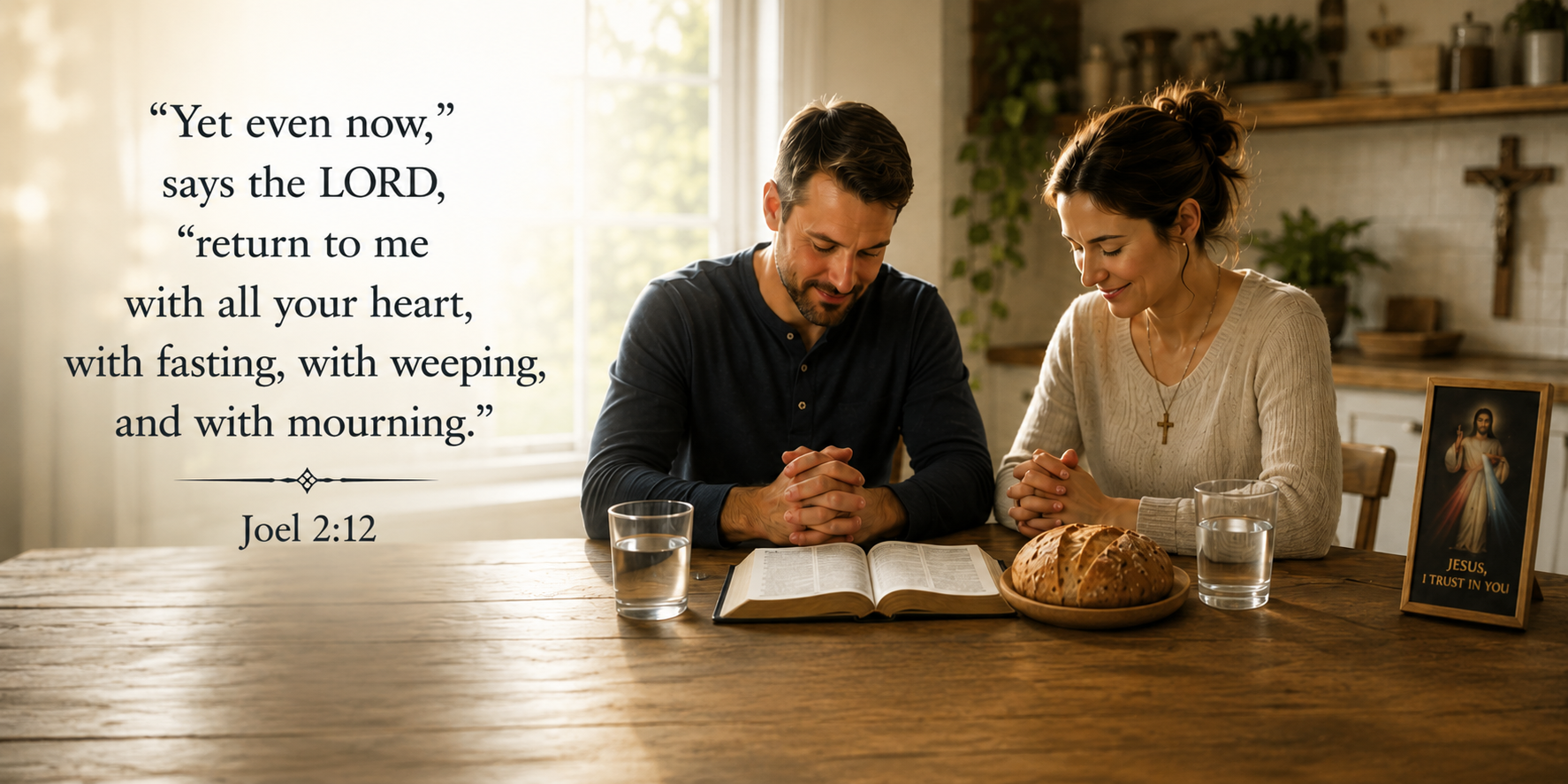
Fasting commended in Scripture – Jl 2:12
Practiced by God’s servant – Ezr 8:21,23; Neh 1:4; Dn 9:3, 10:3
Moves God to mercy – Jon 3:5,10
Of great efficacy against the devil – Mt 9:15; Mk 2:20; Lk 5:35; see also Acts 13:2-3, 14:23; 2 Cor 6:5, 11:27
The obligation of fasting – Jl 2:12; Tb 12:8; Mt 6:16; Mk 2:20; Lk 2:36-37, 5:35; Acts 13:2-3, 14:22; Rom 13:13-14; 2 Cor 6:5, 11:27; Eph 5:18; 1 Thes 5:6; 1 Pt 1:13, 5:8
Merits of fasting – Jer 35:14,19; Jon 3:7,9-10; Jdt 4:8, 8:6; Mt 6:17; Lk 2:37; 1 Sm 31:13; 2 Sm 1:12
Other Biblical References to Fasting
Hebrew Scriptures/Old Testament – 2 Sam 12:16, 21; 1 Kgs 21:27; 2 Chr 20:3; 1 Mc 3:47; Zec 7:5; Ps 35:13; Sir 34:31; Est 4:16; Is 58:5; Jl 1:14
Christian Scriptures/New Testament – Lk 18:12
Religious Tradition on Fasting
Our Lady of Medjugorje 4
“Fast strictly on Wednesdays and Fridays.” (August 14, 1984)
She asks us to accept this difficult message “ … with a firm will.” She asks us to “Persevere in … fasting.” (June 25, 1982)
“The best fast is on bread and water. Through fasting and prayer one can stop wars, one can suspend the natural laws of nature. Works of charity cannot replace fasting … Everyone except the sick, has to fast.” (July 21, 1982)
September 20, 1984 “Dear children! Today I call on you to begin fasting with the heart. … I ask the parish to fast out of gratitude because God has allowed me to stay this long in this parish. Dear children, fast and pray with the heart. Thank you for having responded to my call.”
September 26, 1985 “Dear children! … Thank you for all the sacrifices. I wish to tell you, dear children, to renew the messages which I am giving you. Especially live the fast, because by fasting you will achieve and cause me the joy of the whole plan – which God is planning here in Medjugorje – being fulfilled. Thank you for having responded to my call.”
September 4, 1986 “Dear children! Today again I am calling you to prayer and fasting. … Thank you for having responded to my call.”
Monastic life
Fasting is a pillar of the monastic life across the spiritual traditions, from Western monasticism (stipulated by the Rule of St. Benedict) to the monks of the Eastern churches and Buddhist monks.
Types of Fasting
- Introduction to fasting 5 Give up a food that you like to eat, such as desserts, alcoholic drinks or candy (children); otherwise continue eating as you normally do.
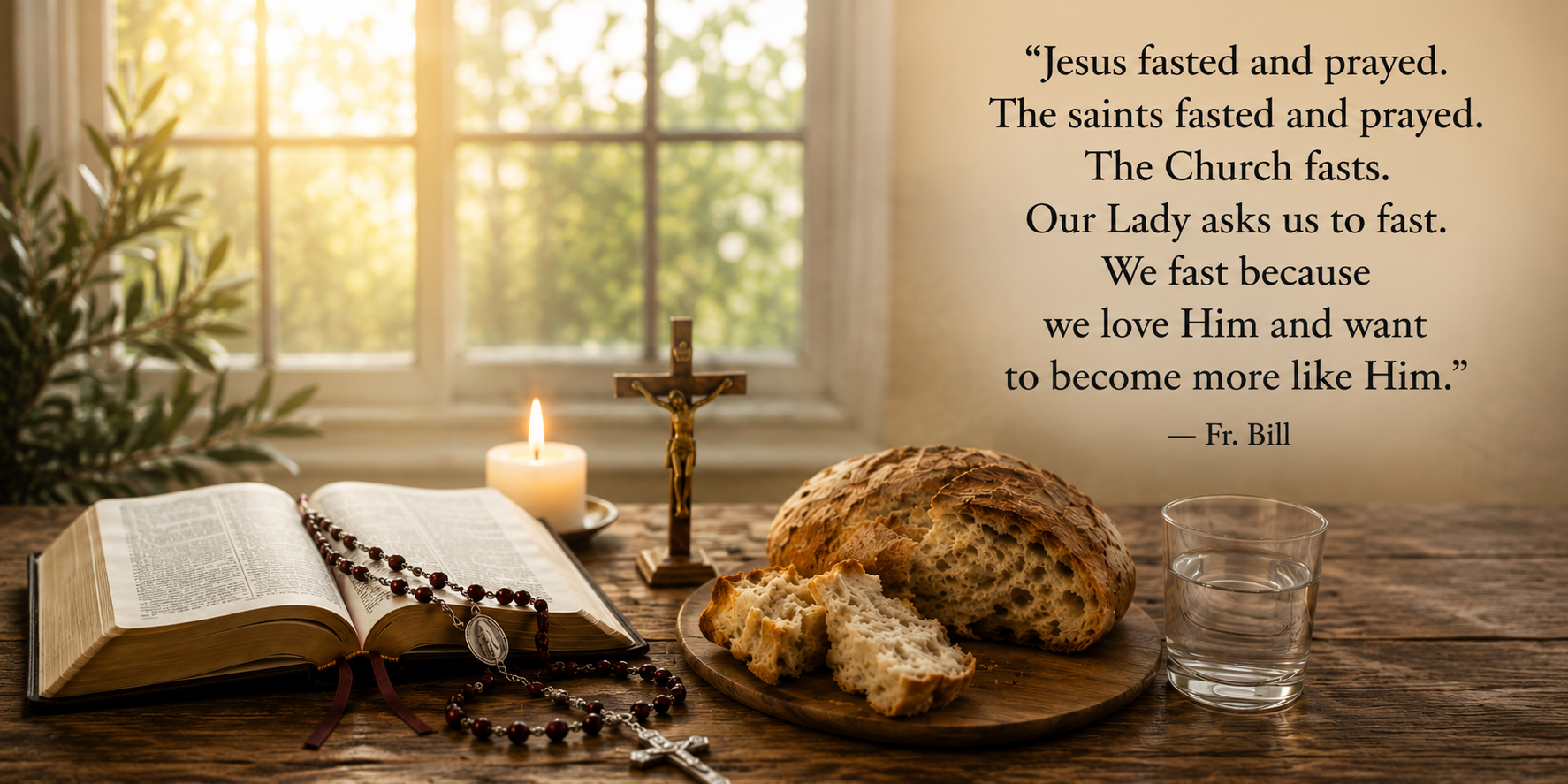
- Traditional fasting Bread & water only, but eat enough to maintain the energy necessary to fulfill your duties and responsibilities. The focus is more on the simplicity of food rather than a reduction in quantity, although the latter may be part of it.
- Extreme fasting
– Not eating or drinking at all (examples: Jesus in the desert; Muslims eating or drinking nothing from sunrise to sunset during the month of Ramadan)
– Take only bread & water for 60 days (the woman who fasted this way said, “It wasn’t a big deal, your body gets used to it.”)
– Eating very minimally such as one slice of bread or two oranges a day (actual examples)
– Consume liquids only
The extreme forms of fasting should be undertaken only if you are in good health and after receiving the Lord’s approval in the context of spiritual direction. Consultation with your doctor may also be advisable.
- Vegetarianism A vegetarian diet is a hallmark of the ascetical life, practiced by many monks and nuns. It is also healthy (vegetables are a good source of important nutrients such as fiber, protein and a wide spectrum of vitamins; protein is the same whether it’s from animals or plants). A vegetarian diet is also better for the environment. The next step would be to go from vegetarianism to vegan (no seafood or dairy products as well as no meat). Whether you want to go vegan is up to you!
Beginning the Discipline of Fasting
Many people begin fasting gradually. For example, have bread & water for one meal but eat as you usually do the rest of the day. Then, when you are ready, have bread & water for a second meal of the day. Finally, move to bread & water for all three meals.
Your body’s metabolism adapts to changes in diet. You will probably find yourself with more energy – not less – as you eat healthier even if your fasting involves eating less.
The Spiritual Fruits of Fasting
- The imitation of Christ in our life (see Scripture: Divine Revelation on Fasting above)
- Obedience to Mary, Mother of God (see Religious Tradition on Fasting above)
- Solidarity with the poor, share their experiences of hunger and minimal, simple eating
- Act of thanksgiving to God for the blessings of good food and drink we are privileged to have when we are not fasting
- Act of humility Fasting is a way of acknowledging our dependence on God for our food and all that we have in life (one of the main themes of the Gospel of Luke)
- Suppression of pride “For you will that our self-denial should … humble our sinful pride, …” (Preface III of Lent, Roman Missal)
- Deepening of our spiritual orientation In the spiritual life as portrayed in the Bible there is a fundamental opposition between money/material things and our relationship with God: “Not one can serve two masters. You will either hate one and love the other, … You cannot serve both God and mammon.” Mt 6:24; Lk 16:13 (Mammon is an Aramaic word meaning wealth or property). Fasting thus moves us away from the exterior, material world to immerse ourselves more deeply in the mystery of God, who is Spirit
- Strengthen resistance against temptation Imitating and obeying God increases our spiritual strength, giving us a greater propensity to reject temptation and its enticements
- Purification of the soul Fasting, like other forms of penance, serves to cleanse the soul of the spiritual effects of sin, in other words, it remits the temporal punishment due to sin 6
- Sanctification of the soul The ancient discipline of fasting is a profoundly spiritual act which brings the soul special graces (see Scripture: Divine Revelation On Fasting and Religious Tradition on Fasting above)
- Sharing in the cross of Christ As penance, fasting is sharing the cross of Christ and thereby an essential act of authentic Christian discipleship: “Whoever wishes to follow me must deny them-self, take up their cross and follow me.” Mt 16:24; Mk 8:34; Lk 9:23
- Improved physical health Luke’s reference to Anna the prophetess (Lk 2:36-38) says she lived until 84. That was about twice the average life span at that time. This suggests her fasting had physical benefits. “We seldom repent of having eaten too little” (from Thomas Jefferson’s Ten Rules). Better physical health enables us to perform more of the activities of discipleship like prayer, worship and service and do them better
- Advance an intention Fasting, like prayer, benefits intentions like “the conversion of sinners”, “the conversion of (name of a particular person/sinner)”, “peace in the world” or “the souls in purgatory”
- Social justice The money we save by fasting enables us to give more to the poor, those who do not have enough to eat. This traditional Lenten practice can and should be part of our spiritual life throughout the year
Resources for fasting
1. The imitation of Christ in our life (see Scripture: Divine Revelation on Fasting above).
2. Ezekiel 4:9 & Gn 1:29 Bread The Bible provides a specific recipe for bread at Ez 4:9 and a more general one at Gn 1:29. Ways you can obtain this bread:
- There is a commercial bakery – Food for Life Baking Co., Inc. – that manufactures these breads exactly according to the biblical recipes. Contact info: (951) 279-5090; 1-800-797-5090; FoodForLife.com
- Their bread can also be found in Fruitful Yield health food stores FruitfulYield.com > scroll down to: Company Information > Fruitful Yield Stores
- Costco
- Some supermarkets, for example Jewel/Osco
The bible breads are perfect for fasting – good tasting, nutritious and they “stick to your ribs”!
3. Brownberry breads have a number of advantages:
- stay fresh at room temperature, so they save room in your refrigerator
offer a variety of healthy breads, examples:
Natural Wheat
12 Grain (one for each of the apostles!)
Extra Grainy 17 Grains & Seeds
Healthful flax & sunflower
Multi-Grain
100% Whole Grain Bread
Extra Grainy Flax & Sesame Seed
Natural Health Nut
Healthfull steel cut oats & honey
Whole Grains 100% Whole Wheat Bread
These are available at major supermarkets like Jewel/Osco (Chicago area)
- come in recyclable packaging (helps us respect the earth, in the spirit of Pope Francis’ encyclical letter Laudato Si)
- reasonably priced
- Dave’s Killer Bread has the same advantages as Brownberry
Questions & answers about fasting
What if I am old, sick or on medication?
You should fast according to your physical condition and circumstances in life. Fasting does not mean discontinuing medications or even nutritional supplements. If you have doubts about your physical condition consult your doctor before starting to fast.
What types of bread should I eat when fasting?
See Resources for Fasting immediately above. Multi-grain, rye, wheat, oat breads etc. are good breads for fasting. Eating a variety of these types of breads helps you get a wider spectrum of nutrients. White bread is not nutritious (and is not recommended even when not fasting.) Whatever bread you eat while fasting should be plain – untoasted, unbuttered, no raisins, cinnamon, peanut butter, jelly etc.
What can I do to maintain good health while I am fasting?
- Stay well hydrated. The discipline of fasting does not include abstaining from water. Water is essential for the functioning of your vital organs, including the brain. Drinking plenty of water helps you fulfill your duties and responsibilities while you are fasting.
- Take supplements such as multi-vitamins. This does not violate your fast.
What if I can’t eat bread for health reasons?
If you can’t eat bread for health or medical reasons then design a fast compatible with your physiology; this is OK as long as the fast is penitentia